Tuesday, February 25, 2014

Don't be a 'writer', be writing


One of my memories from elementary school is when we celebrated Red Ribbon week and each day was a different theme for us to remember the message of Red Ribbon week. One year, I remember one of these themed days was to dress what you wanted to be when you grew up. I remember waking up, putting on something that my mom picked out for me (she said it looked professional or something) and going to school. When my teacher and the other kids in my class asked me what I was dressed as, I said I was an author. It was one of those moments where I didn't know what to say (because I wasn't really dressed as anything specific) but once I answered the question, I knew it was true. I wanted to be an author.

Not much has changed since my elementary school days of wanting to be a writer. I distinctly remember the first story idea that was unrelated to school I tried to put down on paper. I was ten years old and wanted to write a story called "The Island" about these kids who got trapped on a desert island. I know, I was so creative: why else would you call a story about a desert island "The Island'? Thankfully, my writing has improved since then. As the years went by, I continued to read like a fiend and write unfinished stories that I was convinced would become bestsellers. Anyway, I while ago I came across a quote on Facebook from one of the writer pages I liked (#nerdalert). I don't remember who said the quote but the picture said "Don't be a writer. Be writing." This has really stuck with me. For the past year and a half or so, I've kept a journal. I've started journals in the past but never really kept up with it. This journal is more of a writing book than a journal honestly. My goal was when I started this journal in August 2012 to write in it as often as I could. Instead of making unrealistic rules I wouldn't keep, I decided my only rule for this journal was that I could write anything I wanted in it (my thoughts, lists, ideas, stories, words I liked)--as long as I was writing

See, what people don't realize is that it takes practice to become a writer. Bestsellers aren't written by people who only write now and then. They're written by people who read and write all the time and can't stop. Successful authors are people who can't go to school or the supermarket or a soccer game without some type of paper and pen because they need to have it on hand in case they get a great idea. Something I've learned over the past few years is that if somebody wants to be a successful writer, they have to write on a regular basis--even if they aren't currently working on a story. Last post I talked about how writers need to "live" in order to have something to write about, but the other side of that coin is that writers need to practice like any other artist in order to properly portray their idea/character/setting/opinion. If you can do both of those things, and you have an idea that you're passionate about, you can be a writer. Provided you have willpower and caffeinated drinks of course. 

Anyway, I guess the point of all this is that in order to be a good writer, you need to practice. That's part of the reason I like blog posts a lot--they allow me to practice my writing, and I know people will read it. Saying you're a writer is great and all, but you have to have something to back it up. The only way you'll improve at something is to practice, and this includes writing. And in the words of Mr. Patrick, "practice doesn't make perfect, perfect practice makes perfect". So don't just sit around and write junk all the time either. Get an idea you're excited about, and write that story! Try to make it the best you can, and you could end up with something great. Finally, on a slightly unrelated note, I encourage people (non-writers as well) to keep a journal. You don't have to write in it everyday, and you don't even have to write about your life. You can write about anything you want! Just write! There are so many benefits to keeping some type of notebook/journal: you can organize your thoughts/life, remember anything from what you need to get at the store to a beautiful quote, and you can really discover yourself. It may sound cheesy, but for me at least, sometimes I don't know how I feel/think about something until I write about it. You can learn a lot about yourself by writing. Plus, one day when you're 35 or something and your parents have a box full of your stuff in their attic and you happen to dig up your old journal, you'll have a portal to your past self. You can preserve what it's like to be a teenager and on the verge of college and your future. Even though I'm obviously not 35 yet, I've found some of my old, haphazardly-kept journals from when I was in elementary and middle school. It's a cool feeling reading your own writing and remembering what it was like to be you at that age. While your parents and siblings can tell you what you were like at a young age, nobody knows you better than yourself. With a journal you can glimpse at yourself through your own eyes. And that's pretty amazing. 

Thursday, February 13, 2014

Maggie Stiefvater and thoughts about the life of a writer


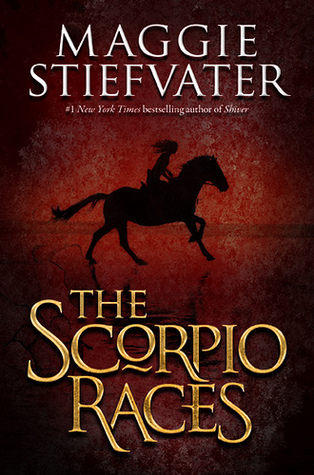
Maggie Stiefvater is one of my favorite authors. For as long as I can remember, I've been that girl who always is reading something, so I've been read the works of many different authors. Maggie Stiefvater is definitely in my mental top 5 favorite authors.She's the author of Lament and Ballad (the first two installments in her Books of Faerie novels) Shiver, Linger, and Forever also known as the Wolves of Mercy Falls trilogy, the Scorpio Races, and the Raven Boys and the Dream Thieves, the first two books in her 4 book series, the Raven Cycle. Besides being a bestselling novelist, Maggie also has written short stories, sharpies guitars, owns a race car, plays the bagpipes and harp, and owns 2 goats with silky hair that faint when they're shocked. She's kind of amazing.

Maggie Stiefvater is plain awesome. She's really cool because she interacts with her readers so much via Facebook, Instagram, etc. Maggie is inspiring not just because she's a brilliant author with brilliant ideas, but because she doesn't just write. The general public get's the idea that if you write books for a living, you're obsessed with grammar and have an English degree and only read books. But great writers don't just read. Great writers live. Good writers have other hobbies besides reading and writing, they travel, have relationships, do crazy things, go out and eat expensive caviar because one of their characters is a Russian billionaire, they race cars and try to live an exciting life. It's important for writers not always be writing, they need to go out and experience the world as well. How can you write about life if you're not really living? Maggie Stiefvater in particular is one of those writers who just has a cool life. She inspires me, and other readers to try something new and do what you love. Even if doing what you love or trying something crazy doesn't make you any money, it gives you something to talk about. And when you can talk about something, you can write about something. And when you can write about something, you can use it in a story. As a writer, imagination can only get you so far. To properly portray the life through words, you need to experience the world as well.

Besides living an awesome life though, Maggie's books are quite original. In one of my previous posts, I talked about how many of the YA books you see on shelves today all have the same general plot line. As a reader, this obviously gets frustrating. But Maggie seems to have the coolest ideas for her stories. Her books are about everything from werewolves that transform because of the temperature (not the moon), dead Welsh kings buried in Virginia, homicidal fairies, and man-eating  horses.I wish that I could have more ideas like this honestly. Maggie Stiefvater advises aspiring writers to write the book they wish to see on the shelf, the book that only you can write. We live in a world where people are constantly trying to fit in and be normal, but when it comes to writing, it's okay to be weird. It's okay to be a little crazy because chances are, somebody out there is just as crazy as you are. Nobody wants to read a book that is just like every other book on the shelf. In order to be published, one has to write something that is truly original, so write the story only you can write. There's nobody like you, so why should there be another story like your story?

P.S. I highly recommend watching this video. Maggie Stiefvater pretty much talks about her own views on what I just wrote about: how it's important to multi-task as a writer. Plus, there's a Camaro. Which makes everything better I suppose.

Tuesday, February 4, 2014

The Appeal of the Byronic Hero


Byronic heroes/heroines are quite similar to anti-heroes in that he/she lacks traditional heroic qualities, as well as appearing arrogant, cynical, moody, intelligent, mysterious, rebellious, educated, usually an outcast, jaded, perceptive, and emotionally conflicted to name a few characteristics. More and more in modern society we are seeing Byronic heroes/heroines as the protagonist of a story. The reason Byronic heroes are so appealing is that they have traits that many people can identify with easily. Often, people tend to see negative qualities in themselves. It's easier for people to see the negative traits they have (either physical traits or personality traits) rather than the positive. Byronic heroes are very self-critical and they recognize their faults, so it is easy for people to identify with that self-critical feeling.Byronic heroes are characters who aren't perfect, but they do have many appealing qualities as well. This allows audience members to not only connect with them, but to want to be like them as well. Byronic heroes are smart, they're often good looking and educated, and we want to emulate them. Audiences can relate to Byronic heroes with their roles as outcasts as well, since almost everybody has felt like they don't belong or fit in at one point or another.
Elsa from Disney's Frozen

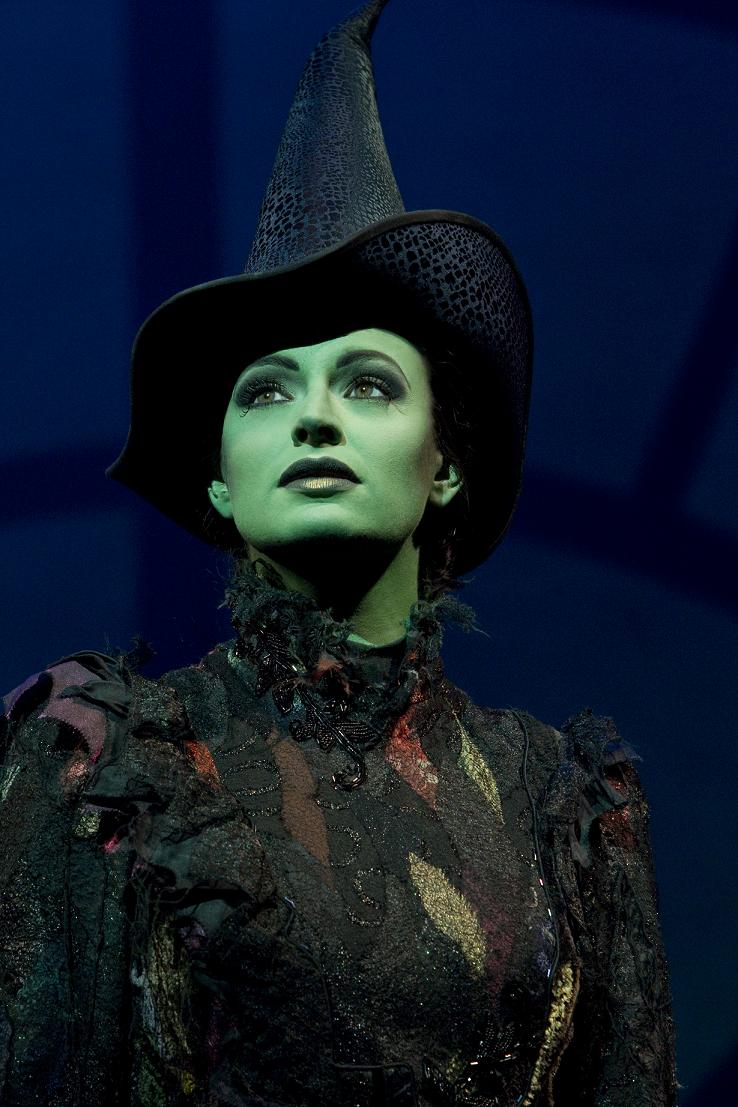
Two great example of Byronic heroines in modern storytelling are the characters Elphaba from the musical and book Wicked, and Elsa from the new Disney movie Frozen. Both Elphaba and Elsa struggle with their roles in society. Elphaba is a young woman who has been an outcast for her entire life due to her green skin, and this isolation is magnified when she realizes she has magical powers. Elphaba is awkward, bossy, green, introverted, blunt, and can even be a little mean at times. Yet audience members around the world absolutely love her and relate to her so much even though she's the wicked witch of the west. The trick to a good Byronic hero is giving them enough good qualities to distinguish them from a villain/antagonist. Besides these seemingly negative qualities, Elphaba has many positive qualities as well. She's smart, courageous, brave, unusually beautiful, kind and gentle, passionate, and stands up for what she believes in. Elsa from Frozen is another great example of a Byronic heroine. She becomes an outcast in her own kingdom for being different and having powers to control ice and snow. Elsa is quiet, introverted, can come off cold, and more, but audiences around the world have fallen in love with her movie because of how much she loves her sister and nearly ruined her life to protect her sister and the people in her kingdom. Stories no longer revolve around the perfect hero anymore, instead more and more Byronic heroes are cropping up in stories because of their reliability to a world full of insecurity. Byronic heroes give us hope that one day, people will learn to love the awkward, flawed outcasts we see in ourselves.

P.S. Just for fun, here are the anthems sung by these two awesome Byronic heroes


Tuesday, January 14, 2014

Words of Wisdom from Wilde

            See that alliteration in the title up there? You see it? Yeah, I know. You’re impressed. Anyways, the other day I was scrolling through Facebook and a picture caught my eye. Since I’m a massive super geek, I like a few pages on the book of faces that have to do with reading and being a bookworm, etc. Nerdy stuff like that. Anyway, the picture was very simple, just a quote from Oscar Wilde, the author of The Importance of Being Earnest (among other things).


            Now, Earnest is currently the only piece of Mr. Wilde’s I've been exposed to thus far in my seventeen years, but I am a one of those people who is obsessed with quotes and I've seen a lot of his quotes that really speak to me, including this one. When we read, we are being influenced. In his book On Writing, Stephen King declared reading as a type of telepathy—the author is at their desk, writing to you the reader in the future and you are having a meeting of the minds across time and space. It’s pretty cool when you think about it. But our reading choices say a lot about us. If you spot somebody reading a copy of Crime and Punishment just out in every day life (not including school) you’re probably going to assume that that person is really smart and probably knows it. Just like the clothes we wear, the books we are seen with say a lot about our personality to the world. While many people understand this fact, they don’t seem to truly grasp how much reading influences you and your way of thinking. Like Mr. Wilde says, “It is what you read when you don’t have to that determines what you will be when you can’t help it.”

Let’s face it. No matter how much we like reading, we've all moaned about at leas one book school has forced us to read for English class. While we need these works of literature to be exposed to great writing, to be in ‘the club’, and other Cartyisms, it is just as important to read outside of class. The book you choose to read in your free time tells you that you are willing to sacrifice precious time and brain power to experience that story. The thoughts, choices, and actions of a character or author influence us as much as real people do. When somebody hangs out with a certain group of people, don’t you notice how that individual’s mannerisms and even beliefs start to change, even if it’s not on purpose? We've all seen this happen. Characters in stories are just like real people; they talk, they have flaws, they make mistakes, and they have ideals and beliefs just like people in real life do. That’s why it’s important to choose wisely when you visit a book store or library. The characters in between those pages are real, because they have the power to change you, which is a power that shouldn't be taken lightly.


Thursday, December 26, 2013

Merry Christmas!!!

            Since yesterday was Christmas, I've decided to do a holiday-themed post this week. Get pumped. Anyway, although Christmas is an international holiday celebrated by people around the world, the customs and traditions involving Christmas vary from culture to culture. One of these is how people greet one another on Christmas. In most English-speaking countries, we exclaim “Merry Christmas!” to strangers, family, and friends during the Christmas season. Other cultures speak different languages though, and therefore have different ways and meaning behind the words they use to greet people during Christmas.
  • “Mele Kalikimaka”—Hawaiian,
  • “Joyeux Noel”—French
  • “Feliz Navidad”—Spanish
  • “Buone Feste Natalizie”—Italian
  • “Kala Christouyenna”—Greek
  • “God Jul” and “Gledelig Jul”—Norwegian
  • “Melkin Yelidet Beaal”—Ethiopian


All of these greetings are different ways to say “Merry Christmas”. Some can be translated literally to say something that isn't exactly “Merry Christmas”, but another festive greeting. For example, the Italian greeting for “merry Christmas” literally translates to “good festival/celebration Christmas”, “Have a good celebration of Christmas”. Languages differ around the world so it is important to be able to understand the language in order to understand the culture. While it is important to know other languages if you wish to communicate with other cultures, sometimes it doesn't matter what language you say a greeting like “Merry Christmas” in, it’s the warmth behind the words that allow you to understand the meaning of those words. 

Sunday, December 8, 2013

My thoughts on Barnes and Noble, Originality, and Vampire Books, or the section formerly known as Young Adult


Have you ever been to Barnes and Noble? Of course you have. Only people who live under rocks or who don’t like fun, magical places haven’t. Anyway, for me, Barnes and Noble is one of the happiest places on Earth, after Disney and before candy stores. Walking into this glorious place, I can peruse rows and rows of books to my heart’s desire. When I go to Barnes and Noble, the section I spend the majority of my time in is the Teen/Young Adult Section. A few years ago, this used to be a great place to find new, unique stories that I would buy and treasure forever after reading them over and over again. Flash forward a few years, and some days, I barely recognize the place anymore. This is just my opinion, but I have to now work extremely hard to find a book that looks like a good story and I’m not going to guess the entire plot just by reading the book jacket. It seems that nearly all of the books geared towards my demographic are all about the same thing. If it’s realistic fiction, the story is going to be about some normal, girl-next-door type who goes on an adventure/experience/revelation with some boy that she probably would never expect to fall for. Lovely. The same story is probably in twelve of the books in the realistic fiction section. If the book is a fantasy book for my demographic (aka females between the ages of 15 and 18), it’s some tale about a girl who is the only one (of course) who can save her kingdom/planet/race from total annihilation and again, she falls for the conveniently hot guy helping her along the way.

 
And don’t even get me started on “Paranormal Romance”. Thanks to the popularity of Twilight, a million authors just decided to write a story containing a vampire, werewolf, or other type of paranormal romance in order to become world famous as well.  Am I being too harsh on these authors and their stories? Maybe. Probably. Who knows? The point is, I feel like there is no such thing as originality any more. It feels like every story being published nowadays is basically the same story, just with different characters, settings, and cover designs. Think about it. There are very few stories being published today that I feel are truly original AND interesting. Again, this is merely my opinion. But when I look at all of these books with pretty much the same plot line, it makes me sad. Is all the originality gone from the world? Are story tellers destined to tell the same stories until the end of time? Humans have always told stories concerning the same themes: love, death, self-discovery, friendship, and good verse evil to name a few. As humans, we simply find these themes most relevant, interesting, and mysterious so naturally we are going to tell stories to try to make sense of the feelings we have for these subjects. But to me, that doesn’t mean one cannot be creative!!! I think that many authors today fall back on what they think will get them readers, and they jump on the bandwagon. When Stephanie Meyer’s Twilight became a success, you started seeing a ton of other books about vampires and werewolves. Maybe this is the publisher’s fault. The publishing company saw Meyer’s success, and decided to dig up all of those young adult books that involved vampires out of the waiting pile and publish them, regardless of the quality of writing and story. So maybe these authors were being original, and publishing houses are just trying to make a few bucks. Creativity is the key to a GREAT story, and I feel that many authors today are missing the creative element. They have a dream to be published and so I feel that many borrow qualities from stories we’ve already heard to create their own story. There is nothing wrong with this, but if you borrow too much, you eventually steal, and you’ve written the same story you borrowed from.

So this is kind of a long rant, but my point is is that creativity is lacking in the world of novels. So to any aspiring authors out there, myself included, be creative! Stretch your brain and don’t take the easy way out! It’s hard to be creative and different from other stories. You will inevitably have similarities to other great stories because you’re human, but go the extra mile into writing a book that’s unique and doesn’t become cliché. Again, these are just my opinions, but let’s try to solve the creativity crisis in the world today. Be original. Don’t be afraid to do so. Until that day originality graces the shelves of B&N once again though, beware the clones that sit upon the shelves of the Young Adult section.

Sunday, December 1, 2013

My thoughts about words and vocabulary (this sounds really boring but I promise, it's more interesting than it sounds)


            I’ve always been obsessed with words. I love how people can use words to tell a story, convey their thoughts, feelings, and ideas, and change the world. I especially love crazy words though that nobody has probably ever heard of before, but that sum up a feeling or idea perfectly. Plus, a lot of them are fun to say. Here are some examples of some of my favorite ‘crazy words’:

·         Gumusservi—noun, Turkish, moonlight shining on water


·         Galeanthropy—noun, the belief that you are a cat

·         Brumous—adjective, French, of grey skies and winter days; filled with heavy clouds or fog; relating to winter or cold, sunless weather

·         Nefelibata—noun, Portuguese, ‘cloud walker’; one who lives in the clouds of their own imagination or dreams, or one who does not obey the conventions of society, literature, or art

·         Toska—noun, Russian, a dull ache of the soul, a sick pining, a spiritual anguish

·         Orphic—adjective, mysterious and entrancing; beyond ordinary understanding

·         Nemophilist—noun, a haunter of the woods; one who loves the forest and its beauty and solitude

·         Psithurism—noun, Greek, the sound of wind through trees

·         Drapetomania—noun, an overwhelming urge to run away

I love how these words describe ideas or feelings that one often wishes to describe but it’s hard to find the words to do so. For example, I’ve read many stories where authors try to describe the sound of the wind blowing through the trees, but it could be more accurate and efficient to use the word “psithurism” instead. I think that if people try to expand their vocabulary then we could all be much better communicators.
      Another thought I’ve had about words lately is words from different languages. If you take a look at the list above, many of those weird words come from different languages: Turkish, French, Portuguese, Russian, Greek…there are so many different languages in the world and they all have different words that may not be found in other languages. Not only could people become better communicators by expanding their vocabulary, but they can become better communicators by learning other languages as well. If you aren’t limited to one language, you can find more ways to express yourself and your feelings. I found the perfect example of this once when I was on Facebook incidentally. There’s this Facebook page called Humans of New York, which is a photo-blog formed by a man named Brandon Stanton. Every day, Stanton roams the streets of New York City, and looks for people that interest him. When he finds one of these interesting people, he goes up to them and asks if he can take their photograph, and then captions the photograph with something the individual said during an interview-like conversation from the 5-minute photo shoot. I remember scrolling on Facebook one day and coming across a HONY post. The picture was of a man, and the caption basically said that he spoke both English and Spanish. The man said he spoke English to explain technical stuff, and Spanish to explain his feelings. He said Latinos have a lot of feelings. The point is, is that different cultures place importance on different values and ways of thinking. By learning different languages, you can express your feelings more efficiently because somebody has already coined the words to explain how you feel. Words are one of our greatest tools, and in my opinion, if we expand our vocabulary, we expand our tool belt and can accomplish so much more